Ancient Greece · 415–413 BCE
What Was the Sicilian Expedition? Athens' Disaster at Syracuse
In short
- Athens sent a huge expedition to Sicily in 415 BCE, persuaded by Alcibiades and by Segesta's false show of wealth.
- Alcibiades was recalled and fled to Sparta; Gylippus' counter-wall stopped the siege of Syracuse.
- An eclipse delayed the retreat in August 413 BCE; the army was destroyed and the survivors starved in the quarries.
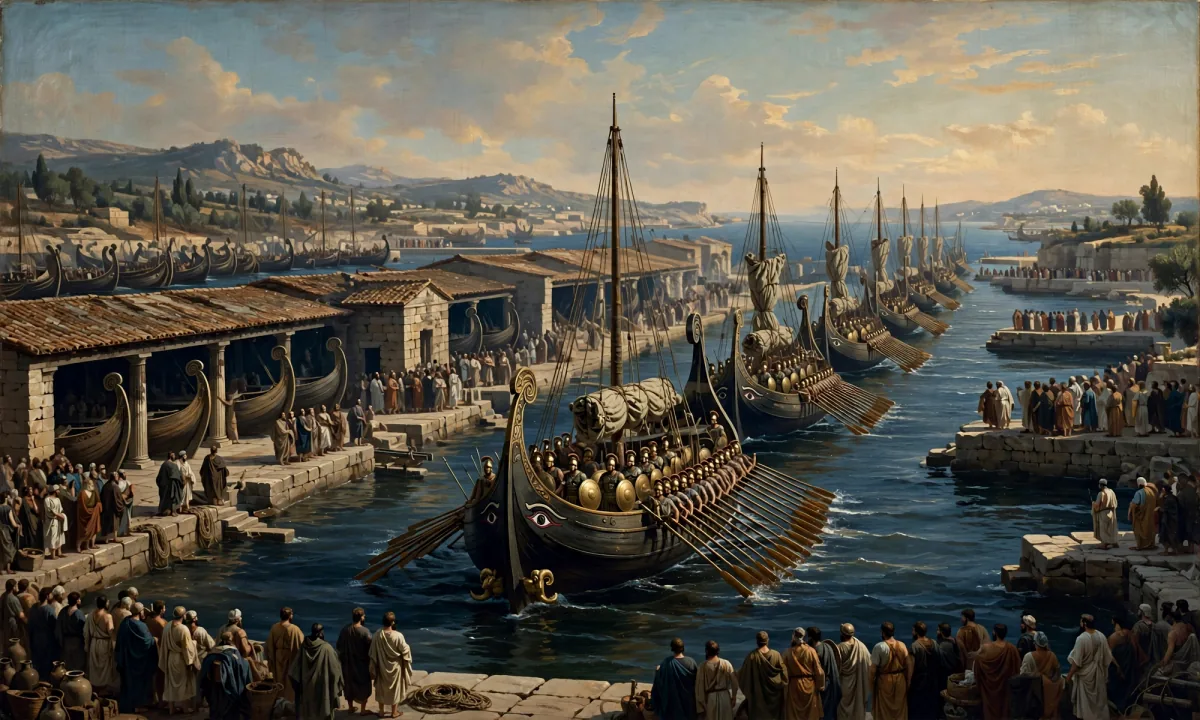
On the night of 27 August 413 BCE the Athenian army outside Syracuse was ready to sail home. Then the full moon went dark. The general, Nicias, asked his seers what it meant, and they told him to wait twenty-seven days. Within weeks the army no longer existed.
An invitation from Sicily
In 416/5 BCE envoys from Segesta, a city in western Sicily, asked Athens for help against its neighbour Selinus, an ally of Syracuse. Segesta promised to pay. When Athenian envoys visited, Thucydides says, they were entertained in house after house with the same gold and silver cups, borrowed and passed round to look like wealth.
Most Athenians, he adds, had no idea how big Sicily was or how many people lived there. In the Assembly the general Nicias, one of the richest men in Athens, famous for his piety and his caution, warned against a war so far away while Sparta was still a threat at home. The young Alcibiades urged it on.
Broken statues and a recall
Nicias tried to scare the Assembly off by saying how huge a force it would need. It voted him even more. In the summer of 415 BCE 134 triremes and 5,100 hoplites sailed, under Nicias, Alcibiades and Lamachus.
Shortly before they left, someone smashed the herms, the stone pillars of the god Hermes that stood at Athenian doorways, all in one night. In the panic that followed, Alcibiades was accused of mocking the sacred Mysteries of Eleusis. The state ship came to bring him home for trial; he slipped away and went to Sparta. Athens condemned him to death in his absence.
Walls on the plateau
Nicias moved slowly, and Syracuse had time to prepare. In 414 BCE the Athenians began a wall to cut the city off by land, across the plateau of Epipolae. Lamachus was killed, but the wall was nearly finished.
Then a Spartan officer, Gylippus, arrived, sent on Alcibiades' advice. He organised the Syracusans and built a counter-wall across the Athenian line. The besiegers became the besieged.

The eclipse
In 413 BCE a second fleet arrived under the general Demosthenes. His night attack on Epipolae failed, and he urged an immediate departure. Nicias hesitated, fearing what the Assembly would do to generals who came home beaten. When he finally agreed, the moon was eclipsed, and he would not move for twenty-seven days.
The Syracusans used the time. They beat the Athenian fleet in the Great Harbour and closed its mouth with a line of ships. After one last failed attempt to break out, the crews refused to row again.

Total destruction
Some 40,000 people, by Thucydides' estimate, set out to retreat on foot. Demosthenes' column surrendered. Nicias' men reached the river Assinarus so desperate with thirst that they drank while the enemy cut them down from the banks.
Nicias and Demosthenes were executed. About 7,000 prisoners were packed into Syracuse's stone quarries for some ten weeks, under the sun by day and the cold by night; most of the survivors were sold as slaves. Plutarch adds that a few won their freedom by reciting the plays of Euripides, whom the Sicilians loved.

In their own words
“They were beaten at all points and altogether; all that they suffered was great; they were destroyed, as the saying is, with a total destruction, their fleet, their army, everything was destroyed, and few out of many returned home.”
Thucydides, History of the Peloponnesian War 7.87, c. 413–400 BCE
Translation by Richard Crawley (1874). Thucydides was in exile at the time and gathered his account from survivors and witnesses.
Why it happened
- Segesta's appeal, backed by an exaggerated show of wealth.
- Alcibiades' ambition, and the Assembly's ignorance of how large Sicily was.
- Nicias' attempt to deter the Assembly by demanding a huge force, which made the gamble bigger.
What happened next
- Athens lost two great fleets and tens of thousands of men; subject cities began to revolt.
- Persia began to fund Sparta's war at sea, and Alcibiades played both sides. Read the story →
- In 411 BCE oligarchs briefly overthrew the democracy in Athens.
Why it still matters
Military academies still teach the expedition as a lesson in strategic overreach. When Admiral Stansfield Turner rebuilt the US Naval War College's curriculum in 1972, he put Thucydides at the start of its strategy course, and students there still begin with him.
Key people
- Nicias
- Rich, pious and cautious Athenian general (c. 470–413 BCE) who opposed the expedition and was made to lead it
- Alcibiades
- Ambitious young general who championed the expedition, then defected to Sparta
- Gylippus
- Spartan officer whose arrival in 414 BCE saved Syracuse
- Demosthenes
- Athenian general (not the later orator) who brought the second fleet and died with Nicias
Key terms
- Herm
- A stone pillar with a carved head of the god Hermes, set up at Athenian doorways and crossroads for luck.
- Eleusinian Mysteries
- Secret rites of Demeter and Persephone at Eleusis; revealing or parodying them was a serious religious crime.
- Epipolae
- The high plateau overlooking Syracuse, key to besieging the city by land.
- Seer
- A specialist who read the will of the gods from sacrifices and signs; armies took seers on campaign.
Test yourself
How did the people of Segesta convince Athenian envoys that they were rich?
- They passed the same borrowed gold and silver cups from house to house
- They sent hostages from their leading families
- They showed them granaries full of Sicilian wheat
- They promised Athens their silver mines
Show the answer
They passed the same borrowed gold and silver cups from house to house. Thucydides says the envoys dined in many houses and saw what looked like great wealth, in fact the same borrowed vessels each time.
The full lesson in the app ends with 5 questions like this one.
Connected stories
- The Peloponnesian War: Why Athens and Sparta Fought: The expedition broke the Peace of Nicias and restarted the war in earnest.
- Alcibiades and the Fall of Athens: Alcibiades' recall and defection shaped the whole campaign.
- The Punic Wars: Rome Against Carthage: Syracuse, which destroyed the Athenians, fell to Rome two centuries later, in 212 BCE.
Frequently asked questions
Why did Athens invade Sicily?
Segesta's appeal, backed by an exaggerated show of wealth. Alcibiades' ambition, and the Assembly's ignorance of how large Sicily was. Nicias' attempt to deter the Assembly by demanding a huge force, which made the gamble bigger.
What happened after the Sicilian Expedition?
Athens lost two great fleets and tens of thousands of men; subject cities began to revolt. Persia began to fund Sparta's war at sea, and Alcibiades played both sides. In 411 BCE oligarchs briefly overthrew the democracy in Athens.
How did the people of Segesta convince Athenian envoys that they were rich?
They passed the same borrowed gold and silver cups from house to house. Thucydides says the envoys dined in many houses and saw what looked like great wealth, in fact the same borrowed vessels each time.
What is the main primary source for “Nicias and the Sicilian Expedition”?
Thucydides, History of the Peloponnesian War 7.87 (c. 413–400 BCE). Translation by Richard Crawley (1874). Thucydides was in exile at the time and gathered his account from survivors and witnesses.
Sources
- Thucydides, History of the Peloponnesian War, Books 6–7
- Plutarch, Life of Nicias
- Donald Kagan, The Peace of Nicias and the Sicilian Expedition (1981)
Images are credited under each picture. Paintings and photographs come from public collections via Wikimedia Commons; scenes with no surviving image are marked as illustrations.
