Ancient Greece · 431–421 BCE
What Caused the Peloponnesian War?
In short
- Thucydides saw the real cause of the war in Athens' rise and Sparta's fear; Corcyra, Potidaea and Megara supplied the quarrels.
- Pericles kept Athenians behind their walls while Sparta ravaged Attica, until a plague killed many of them, Pericles included.
- After Pylos, Amphipolis and the deaths of Cleon and Brasidas, the Peace of Nicias was signed in 421 BCE.
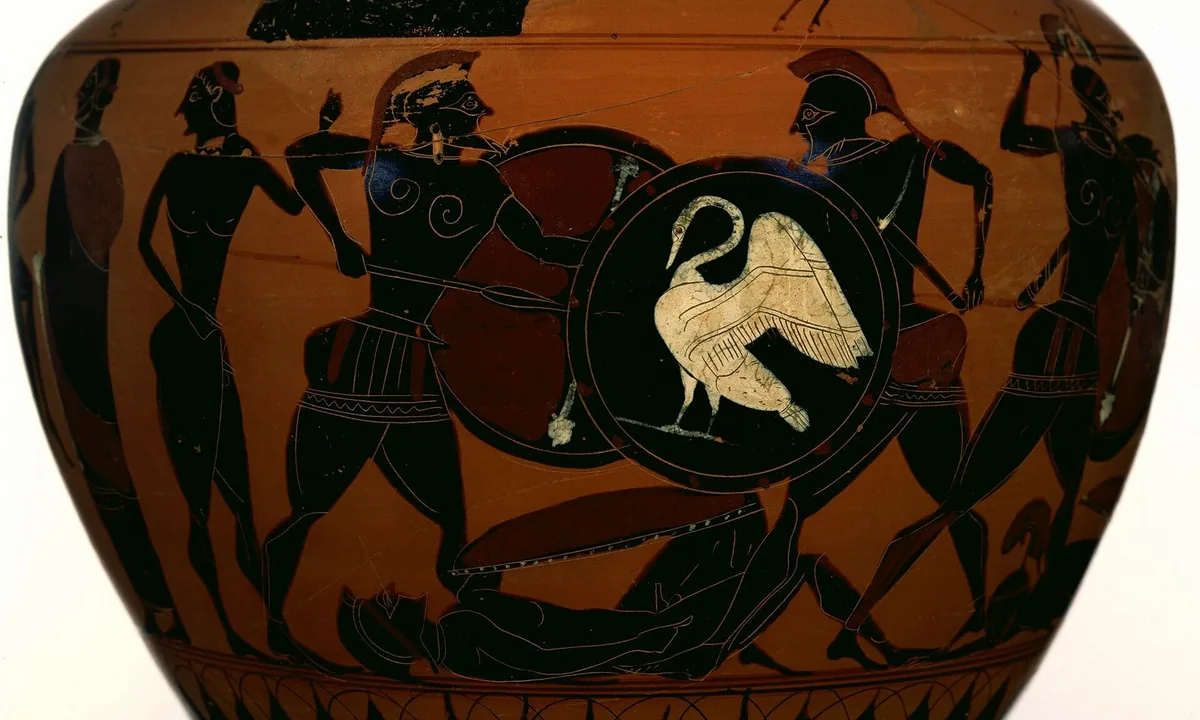
In the summer of 431 BCE the Athenians stood on their city walls and watched a Spartan army burn their farms. Their leader had ordered them not to go out and fight. For Greeks, raised to defend their land in battle, it was the hardest order a general could give.
Why they fought
Athens and Sparta had signed a Thirty Years' Peace in 446/5 BCE. It lasted fourteen. Corinth, Sparta's ally, quarrelled with its colony Corcyra, and in 433 BCE Athens took Corcyra's side. Athens besieged Potidaea when it revolted, and banned the people of Megara from the harbours of its empire and the market of Athens.
In 432 BCE the Spartan assembly voted that Athens had broken the peace. The historian Thucydides, who lived through it all, looked past these quarrels to a deeper cause: Athens' growing power and the fear it caused in Sparta.
Behind the walls
Sparta had the best army in Greece; Athens had the best navy and the money of an empire. Pericles' plan was to refuse battle on land. The people of Attica moved inside the city and the Long Walls, which ran some six kilometres to the port of Piraeus. Grain came in by sea, and the fleet raided the coasts of the Peloponnese.
In 431 BCE the Spartan king Archidamus invaded Attica and burned the farms. He came back almost every summer.

The plague
In 430 BCE a disease arrived through Piraeus and spread through the packed city. Thucydides caught it, survived, and described the fever, the thirst and the despair so it could be recognised if it came again. Bodies lay unburied in the temples, and people stopped fearing gods or laws.
He counts 4,400 hoplites and 300 cavalrymen dead, and says the losses among ordinary people were beyond counting; modern estimates run from a quarter to a third of the population. Pericles died in 429 BCE. What the disease was is still argued over: typhus, smallpox and typhoid have all been proposed.

A ship in time, and Spartans who surrendered
In 427 BCE, after the city of Mytilene revolted, the Athenian Assembly voted to kill all its men. Next day many regretted it. The politician Cleon argued for terror; a man called Diodotus argued that mercy served Athens better. Diodotus narrowly won, and a second ship, rowing day and night, arrived just as the first order was being read. Even so, more than a thousand rebels were executed.
In 425 BCE the Athenian general Demosthenes seized Pylos, on the coast of Sparta's own territory, and 420 Spartan hoplites were cut off on the island of Sphacteria. Cleon promised to bring them back within twenty days, and did: 292 surrendered. Greece was stunned. Spartans were supposed to die rather than give up.

Brasidas and an uneasy peace
Sparta's answer was Brasidas, who marched to the far north and in 424 BCE took Amphipolis, an Athenian colony. The commander who arrived too late to save it was Thucydides. Athens exiled him for twenty years, which gave him the chance to question people on both sides.
In 422 BCE Cleon and Brasidas were both killed in battle outside Amphipolis. With the leaders of both war parties dead, the two sides signed the Peace of Nicias in 421 BCE, meant to last fifty years.
In their own words
“The real cause I consider to be the one which was formally most kept out of sight. The growth of the power of Athens, and the alarm which this inspired in Lacedaemon, made war inevitable.”
Thucydides, History of the Peloponnesian War 1.23, c. 431–400 BCE
Translation by Richard Crawley (1874). Lacedaemon is Sparta. Thucydides began writing when the war broke out and did not live to finish his account.
Why it happened
- Athens' growing power, and Sparta's fear of it, in Thucydides' judgement.
- Disputes over Corcyra, Potidaea and the Megarian Decree.
- Sparta's allies, above all Corinth, pressed it to act.
What happened next
- The plague killed perhaps a quarter of Athens' people, and Pericles with them.
- The Peace of Nicias broke down, and in 415 BCE Athens sent a great fleet to Sicily. Read the story →
- Thucydides' exile made him the war's great historian.
Why it still matters
In 2017 the political scientist Graham Allison published Destined for War, arguing that the United States and China risk a “Thucydides Trap”, the danger that a rising power and a ruling one drift into war, as Athens and Sparta did. Thucydides' one sentence on fear has become a fixture in debates on how great powers handle each other.
Key people
- Archidamus II
- King of Sparta who led the first invasions of Attica
- Cleon
- Athenian politician who urged harsh measures and captured the Spartans on Sphacteria
- Brasidas
- Spartan general who took Amphipolis in 424 BCE
- Thucydides
- Athenian general and historian (c. 460–c. 400 BCE), exiled after Amphipolis
- Nicias
- Athenian general who negotiated the peace of 421 BCE
Key terms
- Peloponnesian League
- Sparta's alliance of cities, mostly in the Peloponnese, the southern peninsula of Greece.
- Long Walls
- Walls running about six kilometres from Athens to its port, Piraeus, so the city could be supplied by sea during a siege.
- Megarian Decree
- Athens' ban on Megarians using the harbours of its empire and the market of Athens, a grievance before the war.
- Helots
- The enslaved population of Laconia and Messenia who farmed for Sparta, and whose revolts Sparta always feared.
Test yourself
What was the Megarian Decree?
- An alliance between Megara and Sparta
- A law granting Megarians Athenian citizenship
- A treaty ending a border war with Megara
- A ban on Megarians using the harbours of Athens' empire
Show the answer
A ban on Megarians using the harbours of Athens' empire. Athens shut Megarians out of the ports of its empire and the market of Athens, a heavy blow to a trading city and one of the grievances before the war.
The full lesson in the app ends with 5 questions like this one.
Connected stories
- Aristides and the Delian League: The alliance that became Athens' empire was the power Sparta feared.
- Nicias and the Sicilian Expedition: The Peace of Nicias collapsed and the war widened to Sicily.
Frequently asked questions
What caused the Peloponnesian War?
Athens' growing power, and Sparta's fear of it, in Thucydides' judgement. Disputes over Corcyra, Potidaea and the Megarian Decree. Sparta's allies, above all Corinth, pressed it to act.
What happened in the first ten years of the Peloponnesian War?
The plague killed perhaps a quarter of Athens' people, and Pericles with them. The Peace of Nicias broke down, and in 415 BCE Athens sent a great fleet to Sicily. Thucydides' exile made him the war's great historian.
What was the Megarian Decree?
A ban on Megarians using the harbours of Athens' empire. Athens shut Megarians out of the ports of its empire and the market of Athens, a heavy blow to a trading city and one of the grievances before the war.
What is the main primary source for “The Peloponnesian War: Why Athens and Sparta Fought”?
Thucydides, History of the Peloponnesian War 1.23 (c. 431–400 BCE). Translation by Richard Crawley (1874). Lacedaemon is Sparta. Thucydides began writing when the war broke out and did not live to finish his account.
Sources
- Thucydides, History of the Peloponnesian War, Books 1–5
- Donald Kagan, The Peloponnesian War (2003)
- Victor Davis Hanson, A War Like No Other: How the Athenians and Spartans Fought the Peloponnesian War (2005)
Images are credited under each picture. Paintings and photographs come from public collections via Wikimedia Commons; scenes with no surviving image are marked as illustrations.
