Ancient Egypt · 1279–1213 BCE
Who Was Ramses II? Kadesh, the First Peace Treaty and Abu Simbel
In short
- At Kadesh (c. 1274 BCE) Ramses II was ambushed by the Hittites; the battle was a draw that he presented as a victory.
- Around 1259 BCE he and Hattusili III made the earliest peace treaty whose text survives from both sides.
- In a 66-year reign he built on a vast scale, from Abu Simbel to Pi-Ramesse, and became the model of a great pharaoh.
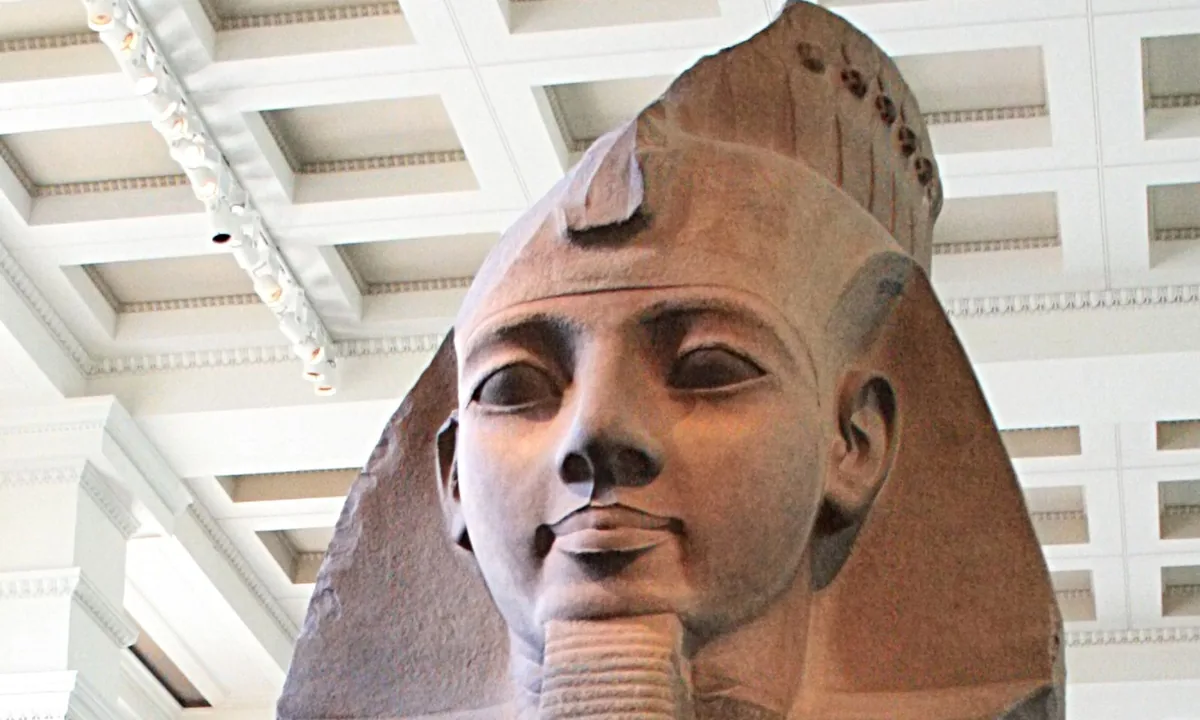
In the spring of about 1274 BCE, a young pharaoh marched north into Syria and camped near the city of Kadesh, trusting two captured herdsmen who told him the Hittite army was far away. It was hidden just across the river.
A dynasty of soldiers
After Tutankhamun, the throne passed to the old official Ay and then to the general Horemheb, who had no son. He chose another military man, Ramses I, whose family came from the north-eastern Delta. His son Seti I fought to win back Egypt's position in Syria.
Seti's son Ramses II became king around 1279 BCE, in his early twenties. Egypt's great rival was the Hittite empire, based in what is now Turkey, and the two powers met in the borderlands of Syria.
Ambush at Kadesh
Ramses had split his army into four divisions named after gods. Believing the false report that the Hittites were far off, he rushed ahead with the first. The Hittite king, Muwatalli II, sent his chariots across the river into the second division, the division of Ra, which broke and fled into the king's camp.
Ramses, by his own account, was almost alone. He fought his way out with his guard until reinforcements arrived. The battle ended without a decisive result: Ramses did not take Kadesh, and the Hittites kept control of the region.

Victory on the walls
At home, Kadesh became a triumph. Ramses had the story carved on temple after temple, at Abydos, Karnak, Luxor, the Ramesseum and Abu Simbel, in a long poem and a shorter official report. In the poem he calls on Amun and single-handedly scatters thousands of enemy chariots. He even names his two chariot horses, Victory-in-Thebes and Mut-is-Content, and promises to feed them himself.
Hittite records, found in their capital Hattusa, tell a different story, in which Egypt went home without its objective. Historians read the two sides together: the battle was probably a draw, and Ramses's version is propaganda.
The first peace treaty we can read
War dragged on for years. Then, in about 1259 BCE, Ramses and the new Hittite king, Hattusili III, agreed a treaty of peace and alliance. Each side kept a copy. The Egyptian version was carved at Karnak and the Ramesseum; the Hittite version survives on clay tablets from Hattusa.
The two kings promised never to attack each other, to help each other against enemies and to send back each other's fugitives. Thirteen years later, Ramses married a Hittite princess. It is the earliest peace treaty whose text survives from both parties.
Building for eternity
Ramses reigned for 66 years and outlived many of his children; he had well over a hundred. He built more than any other pharaoh: the rock-cut temples of Abu Simbel in Nubia, the Ramesseum at Thebes, a new capital in the Delta called Pi-Ramesse, and additions to Karnak and Luxor. He also carved his name over older kings' monuments.
Nine later kings took the name Ramses. Greek visitors knew his statues under the name Ozymandias, a version of his throne name, Usermaatre. In 1818 the poet Percy Bysshe Shelley turned a shattered statue into a warning about the pride of kings.

In their own words
“There shall be no hostilities between them, forever. The great chief of Kheta shall not pass over into the land of Egypt, forever, to take anything therefrom. Ramses-Meriamon, the great ruler of Egypt, shall not pass over into the land [of Kheta, to take anything] therefrom, forever.”
Ramses II and Hattusili III, Treaty between Egypt and the Hittites, Egyptian version at Karnak, c. 1259 BCE
Translation by J. H. Breasted, Ancient Records of Egypt, vol. III §376 (1906). “Kheta” is the Egyptian name for the Hittites; brackets mark words restored where the stone is damaged.
Why it happened
- Egypt and the Hittite empire both wanted control of the trade cities of Syria.
- Ramses's father Seti I had revived Egyptian campaigning in the north.
- False intelligence led Ramses to advance carelessly at Kadesh.
What happened next
- Kadesh ended in stalemate, and the frontier stayed roughly where it was.
- The treaty of c. 1259 BCE brought lasting peace with the Hittites and a royal marriage.
- Later kings copied his name and style; Ptolemaic and Roman rulers still had themselves carved as pharaohs on temple walls. Read the story →
Why it still matters
A copy of the Hittite version of the Kadesh treaty, a gift from Turkey, hangs at United Nations headquarters in New York. Abu Simbel itself was cut into more than a thousand blocks and rebuilt on higher ground between 1964 and 1968 to save it from Lake Nasser, the start of UNESCO's World Heritage idea.
Key people
- Ramses II
- Pharaoh 1279–1213 BCE, also written Ramesses; fought at Kadesh and made peace with the Hittites
- Muwatalli II
- Hittite king who led the ambush at Kadesh
- Hattusili III
- Hittite king who signed the peace treaty with Ramses around 1259 BCE
- Nefertari
- Ramses's first Great Royal Wife, honoured with the smaller temple at Abu Simbel
- Seti I
- Ramses's father, who campaigned in Syria and Canaan before him
Key terms
- Hittites
- A Bronze Age empire centred on Hattusa in central Anatolia (modern Turkey), Egypt's great rival for Syria.
- Chariot
- A light two-wheeled vehicle pulled by horses, the decisive weapon of Late Bronze Age armies.
- Propaganda
- Information presented to persuade; Ramses's Kadesh reliefs are a classic example.
- Ramesseum
- Ramses II's mortuary temple on the west bank at Thebes.
Test yourself
What was the actual result of the Battle of Kadesh?
- A decisive Egyptian victory and the capture of Kadesh
- A stalemate: the Hittites kept control of the region
- The Hittite king was captured and executed
- Egypt lost all its territory in Canaan
Show the answer
A stalemate: the Hittites kept control of the region. Ramses survived and claimed victory on his temples, but he did not take Kadesh, and Hittite records show the region stayed under their control.
The full lesson in the app ends with 5 questions like this one.
Connected stories
- Tutankhamun: The Boy King and the Hidden Tomb: With Tutankhamun's family line extinct, the generals Horemheb and Ramses I took the throne.
- The Nile: How a River Made Egypt: The Aswan High Dam's lake would have drowned Abu Simbel, so the temples were moved block by block.
Frequently asked questions
Why did Ramses II fight the Hittites?
Egypt and the Hittite empire both wanted control of the trade cities of Syria. Ramses's father Seti I had revived Egyptian campaigning in the north. False intelligence led Ramses to advance carelessly at Kadesh.
What were the results of the Battle of Kadesh?
Kadesh ended in stalemate, and the frontier stayed roughly where it was. The treaty of c. 1259 BCE brought lasting peace with the Hittites and a royal marriage. Later kings copied his name and style; Ptolemaic and Roman rulers still had themselves carved as pharaohs on temple walls.
Why was Ramses caught off guard at Kadesh?
He believed spies who said the Hittites were far away. Two men posing as deserters told Ramses the Hittite army was far to the north. He hurried ahead and was ambushed.
What is the main primary source for “Ramses II: Kadesh, a Peace Treaty and a Giant Ego”?
Ramses II and Hattusili III, Treaty between Egypt and the Hittites, Egyptian version at Karnak (c. 1259 BCE). Translation by J. H. Breasted, Ancient Records of Egypt, vol. III §376 (1906). “Kheta” is the Egyptian name for the Hittites; brackets mark words restored where the stone is damaged.
Sources
- K. A. Kitchen, Pharaoh Triumphant: The Life and Times of Ramesses II (1982)
- Joyce Tyldesley, Ramesses: Egypt's Greatest Pharaoh (2000)
- Trevor Bryce, The Kingdom of the Hittites (new ed., 2005)
- James Henry Breasted (trans.), Ancient Records of Egypt, vol. III (1906)
Images are credited under each picture. Paintings and photographs come from public collections via Wikimedia Commons; scenes with no surviving image are marked as illustrations.
