Medieval Europe · January 1077
What Happened at Canossa in 1077?
In short
- Popes and kings clashed over who should appoint bishops, who were both churchmen and powerful lords.
- Excommunicated and facing rebel princes, Henry IV did penance at Canossa in January 1077 and was absolved.
- The quarrel continued for decades and was settled only by the Concordat of Worms in 1122.
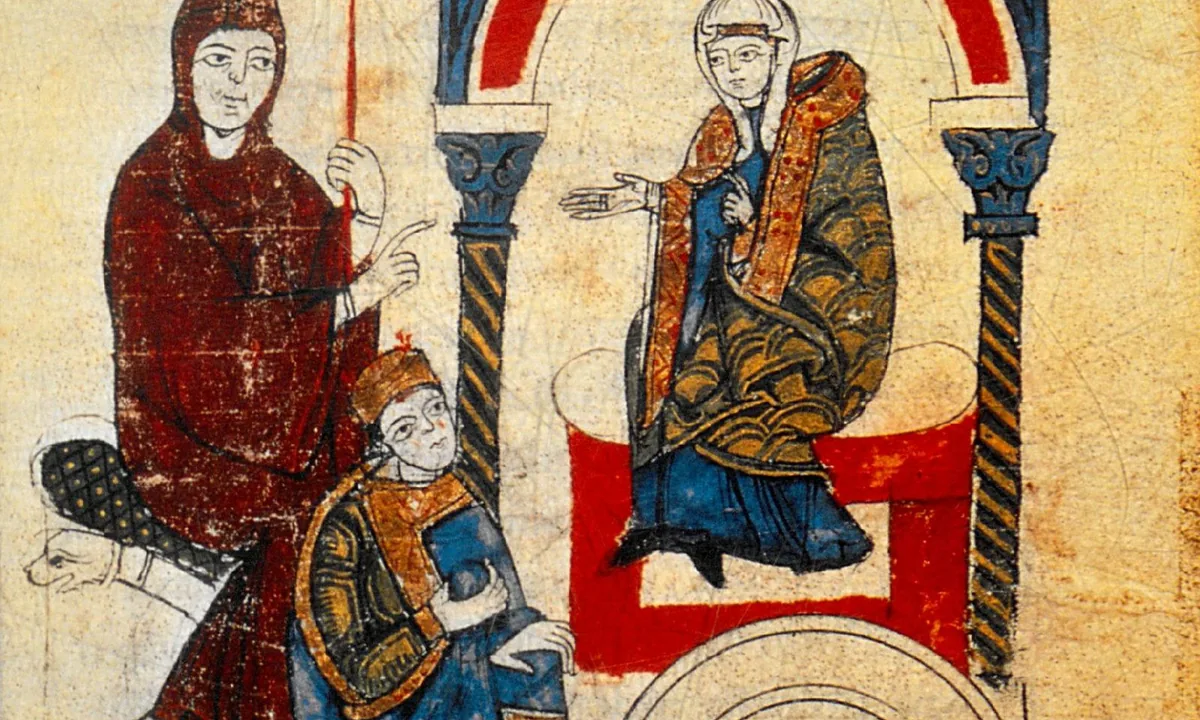
In late January 1077, a king stood outside the gate of a castle in the Apennines, barefoot in the snow and dressed in a penitent's wool. Inside was the pope who had excommunicated him. Henry IV waited there for three days.
Who chooses a bishop?
In the 11th century bishops were great lords as well as churchmen. They held lands, raised troops and advised kings, so kings chose them. At a new bishop's installation the king handed him a ring and a staff, symbols of his spiritual office. This was called investiture.
A reform movement in the Church attacked the system. Reformers condemned simony, the buying of church offices, and married priests, and they wanted the clergy free from control by laymen, however royal. In 1073 their most forceful leader, the archdeacon Hildebrand, became Pope Gregory VII. A list of claims in his register, the Dictatus papae of 1075, stated that a pope could depose emperors.
Letters of war
Henry IV had been king of Germany since 1056, when he was six, and expected to govern the Church in his lands as his father had. When he named his own archbishop of Milan, Gregory threatened him. In January 1076, at Worms, Henry and his bishops renounced their obedience. His letter addressed Gregory as “not pope but false monk” and ended: “Descend, descend!”
Gregory replied in February 1076 by excommunicating Henry, declaring him deposed and releasing his subjects from their oaths of loyalty. It was an unprecedented step. German princes already in revolt seized the chance. In October they gave Henry an ultimatum: unless he was absolved within a year of his excommunication, they would choose a new king. They invited the pope to Germany to judge him.
Three days at the gate
Henry moved first. In midwinter he crossed the Alps with his wife Bertha and their small son; the chronicler Lampert of Hersfeld says the queen was dragged down icy slopes on ox-hides. Gregory, travelling north, took refuge at Canossa, a fortress belonging to his ally Matilda, countess of Tuscany.
Henry came as a penitent, not a conqueror. For three days, by Gregory's own account, he stood at the gate barefoot, in wool, weeping. Matilda and Abbot Hugh of Cluny, Henry's godfather, pleaded for him. On 28 January Gregory lifted the excommunication. A priest could hardly refuse a sinner who did public penance, and Henry knew it.

Who won?
In the short term, Henry. Absolution knocked away the princes' excuse. They elected a rival king, Rudolf of Rheinfelden, anyway, and civil war followed. Gregory excommunicated Henry again in 1080, but this time fewer listened. Henry set up a rival pope, Clement III, captured Rome in 1084 and was crowned emperor by him.
Gregory's Norman allies rescued him, sacking Rome so savagely that he had to leave with them. He died at Salerno in 1085, reportedly saying: “I have loved justice and hated iniquity; therefore I die in exile.” The investiture question was settled only in 1122 by the Concordat of Worms: the emperor gave up investing bishops with ring and staff, but kept a say in German elections and granted bishops their lands.

Going to Canossa
In 1872, during his struggle with the Catholic Church, the German chancellor Otto von Bismarck told the Reichstag: “We will not go to Canossa.” The phrase stuck; in German, “going to Canossa” still means a humiliating climbdown.
Historians are less sure it was a humiliation. Penance was a familiar ritual, and Henry used it to outmanoeuvre his enemies at home. But the episode showed something new: a pope claiming the right to judge a king, and a king obliged to come to him. The idea that spiritual and royal power were separate, rival authorities would shape European politics for centuries.

In their own words
“There, having laid aside all the belongings of royalty, wretchedly, with bare feet and clad in wool, he continued for three days to stand before the gate of the castle. Nor did he desist from imploring with many tears the aid and consolation of the apostolic mercy until he had moved all of those who were present there… to such pity and depth of compassion that, interceding for him with many prayers and tears, all wondered indeed at the unaccustomed hardness of our heart.”
Pope Gregory VII, Letter to the German princes (Register 4.12), late January 1077
Translation by Ephraim Emerton, The Correspondence of Pope Gregory VII (1932). Gregory was explaining to princes who wanted Henry deposed why he had absolved him, so he stresses that he gave way only when everyone present begged him to.
Why it happened
- Bishops were both church leaders and great landholders, so both kings and popes wanted to control who became one.
- Church reformers wanted to free the clergy from lay control, simony and marriage.
- German princes in revolt against Henry used the pope's sentence to threaten his throne.
What happened next
- Germany fell into civil war between Henry and rival kings chosen by the princes.
- Gregory's successor Urban II, still facing Henry's antipope, launched the First Crusade in 1095. Read the story →
- The Concordat of Worms (1122) separated the spiritual and worldly sides of a bishop's office.
Why it still matters
In September 2018 the Vatican and the People's Republic of China signed a provisional agreement on how Catholic bishops in China are chosen, and they have renewed it since. Nearly a thousand years after Canossa, who appoints a bishop is still something a pope and a government have to negotiate.
Key people
- Pope Gregory VII (Hildebrand)
- Reforming pope (1073–85) who excommunicated and deposed Henry IV
- Henry IV
- King of Germany from 1056 and emperor from 1084, who did penance at Canossa
- Matilda of Tuscany
- Countess who ruled much of northern Italy; Gregory's ally and owner of Canossa
- Hugh of Cluny
- Abbot of the great monastery of Cluny and Henry's godfather, who interceded for him
- Rudolf of Rheinfelden
- Duke of Swabia, elected as rival king by Henry's enemies in 1077
Key terms
- Investiture
- Installing a bishop or abbot by handing him the symbols of office; when done by a king or lord it was “lay investiture”.
- Excommunication
- Exclusion from the sacraments and the Christian community; for a king, it could release subjects from their loyalty.
- Simony
- Buying or selling church offices or sacraments, named after Simon Magus, who tried to buy spiritual power in the Book of Acts.
- Antipope
- A rival claimant to the papacy whose election the Church later judged invalid, such as Henry's Clement III.
- Concordat of Worms
- The 1122 agreement that separated a bishop's spiritual office, conferred by the Church, from his lands, granted by the ruler.
Test yourself
Whose castle was Canossa?
- Rudolf of Rheinfelden
- Abbot Hugh of Cluny
- Matilda, countess of Tuscany
- Robert Guiscard, the Norman duke
Show the answer
Matilda, countess of Tuscany. Canossa belonged to Matilda of Tuscany, who ruled much of northern Italy and supported Gregory. She and Abbot Hugh of Cluny pleaded with the pope on Henry's behalf.
The full lesson in the app ends with 5 questions like this one.
Connected stories
- Charlemagne: An Emperor in the West Again: When Leo III crowned Charlemagne in 800, popes and emperors bound their authority together; Canossa tested which of them stood higher.
- The First Crusade: Urban II's call to crusade in 1095 asserted papal leadership of Western Christendom while an imperial antipope held Rome.
- Magna Carta, 1215: Pope Innocent III used the authority Gregory had claimed when he excommunicated King John and annulled Magna Carta.
Frequently asked questions
Why did Henry IV go to Canossa?
Bishops were both church leaders and great landholders, so both kings and popes wanted to control who became one. Church reformers wanted to free the clergy from lay control, simony and marriage. German princes in revolt against Henry used the pope's sentence to threaten his throne.
How did the investiture controversy end?
Germany fell into civil war between Henry and rival kings chosen by the princes. Gregory's successor Urban II, still facing Henry's antipope, launched the First Crusade in 1095. The Concordat of Worms (1122) separated the spiritual and worldly sides of a bishop's office.
Whose castle was Canossa?
Matilda, countess of Tuscany. Canossa belonged to Matilda of Tuscany, who ruled much of northern Italy and supported Gregory. She and Abbot Hugh of Cluny pleaded with the pope on Henry's behalf.
What is the main primary source for “Canossa: A King in the Snow”?
Pope Gregory VII, Letter to the German princes (Register 4.12) (late January 1077). Translation by Ephraim Emerton, The Correspondence of Pope Gregory VII (1932). Gregory was explaining to princes who wanted Henry deposed why he had absolved him, so he stresses that he gave way only when everyone present begged him to.
Sources
- Pope Gregory VII, The Correspondence of Pope Gregory VII, translated by Ephraim Emerton (1932)
- I. S. Robinson, Henry IV of Germany, 1056–1106 (1999)
- H. E. J. Cowdrey, Pope Gregory VII, 1073–1085 (1998)
- Brian Tierney, The Crisis of Church and State, 1050–1300 (1964)
Images are credited under each picture. Paintings and photographs come from public collections via Wikimedia Commons; scenes with no surviving image are marked as illustrations.
